

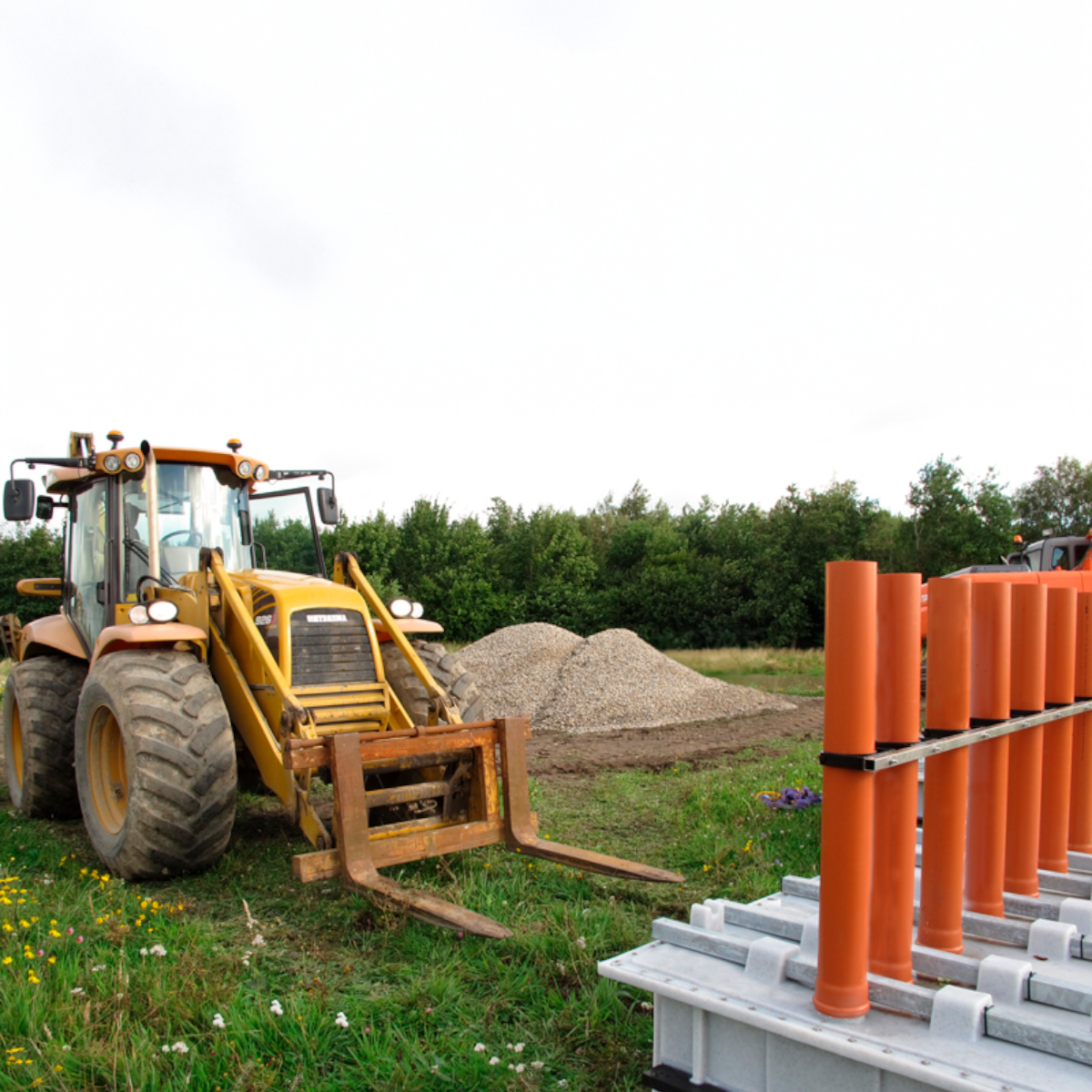
Recently, there has been a lot of focus on separate sewage systems. In this context, it is obvious to clean the rainwater and use it for recreational purposes, among other things, to relieve the large sewage treatment plants. Allerød Municipality did the same in the project “DPF Lynge Nord”. Here, the surface water is directed through a WaterCare Filtration fine particle separator to a new lake that houses large newts and other species that require clean water.
Why is treatment necessary, many will ask? On its way from roads, sidewalks and buildings, rainwater can become contaminated with a number of substances that are problematic for the environment, but it is in many ways a waste of resources to direct rainwater into the sewer system and overload our treatment plants when the water can be handled and treated locally.
"It is obvious to collect the water and direct it, bypassing the sewer, directly to streams, lakes or the sea. But unfortunately, the water contains various environmentally harmful substances, which, among other things, originate from contact with asphalt, concrete and the other surfaces it hits. The focus is particularly on a number of heavy metals, suspended matter and phosphorus, and the water can also be contaminated with pesticides and a number of other chemicals, including PAHs."
The biggest benefit of a DPF is that it relieves the sewage system. This means that the treatment plants do not have to treat water that is only slightly polluted, and there is no need to pump the water around.
An important side benefit is that the water can instead be used for recreational purposes in fountains, ditches and lakes.
The water becomes so clean that it can be easily directed to particularly sensitive recipients. For example, Allerød Municipality directs the water to a new lake that will house the great newt and other species that require clean water.
In the Danish-developed DPF system, gravity does the work, eliminating the need to invest in pumps and other installations, while minimizing maintenance requirements.
An additional advantage is that DPF filters do not clog nearly as easily as other types of filter systems.
"Finally, it is possible to fit the method into dense urban neighborhoods and near roads, as the DPF elements can be placed underground or built into a square or other surface."
Marina Bergen Jensen, Professor at the University of Copenhagen