

Vendelbo Spedition in Hjørring focuses on green thinking - a principle that they have no doubt is the way forward. Flemming, Operations Director/COO at Vendelbo Spedition, says:
“What we did right yesterday, we can do even better tomorrow. It’s something everyone thinks about when it comes to freight solutions, so why not add an extra element called sustainability?”
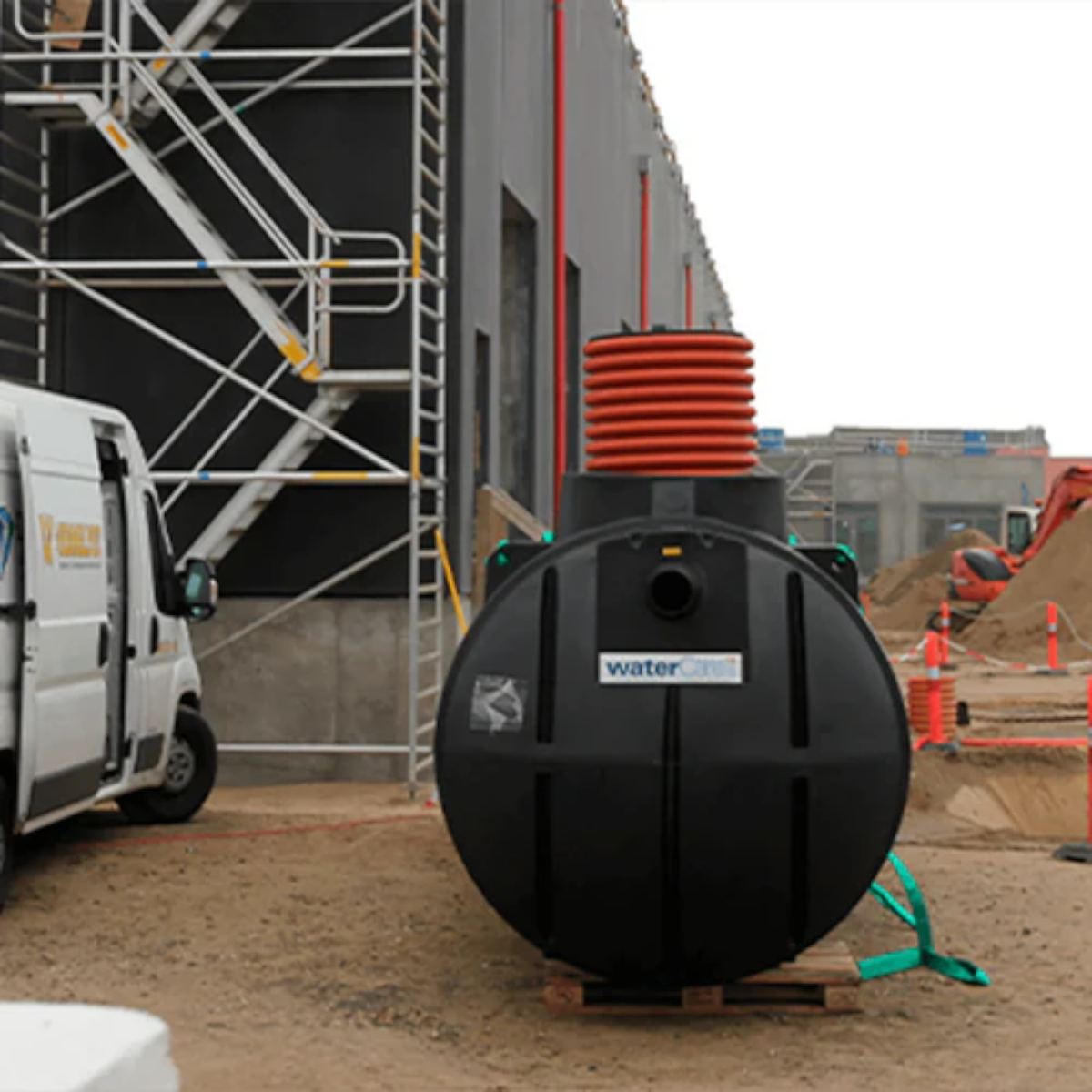
The company is open to testing different fuel alternatives for the future, such as methanol, hydrogen and HVO2. In connection with the construction of a new warehouse, Vennelyst Spedition has also chosen to implement a rainwater system. The 15 m3 rainwater tank has been installed by Vennelyst Ingeniør- og Entreprenørforretning A/S and will be used to wash the trucks in their wash hall.
Considerations behind choosing the rainwater tank
Regarding the considerations behind the choice of the rainwater tank, Flemming says: “We have had no doubts that we will do something extra - we are not afraid to try new things. We simply are not, so it was not a difficult choice.” We have had no concerns at all, other than that it was quite natural, now that we had the opportunity, to do something extra. We are a bit special in that area - we cannot just sit down with our arms crossed and say, that is it. We want to challenge ourselves. What you do today, you have to do better tomorrow.
Reduced van consumption
The implementation of a rainwater system that will collect rainwater from the roof of a newly built warehouse will result in less water consumption. The rainwater is led into the tank from the new warehouse, and before the water reaches the tank, it goes through a filtration process where leaves and other coarse particles are sorted out. With the new rainwater system, the company significantly reduces the use of clean drinking water by utilizing the potential of rainwater for washing trucks. Flemming says: “All other things being equal, it must be the lower water consumption that we have that comes from there. But we haven’t separated it, so we can’t see what goes to car washing, but we have the same number of employees. And just because we have a rainwater system, people don’t start going to the toilet more or drinking more coffee, so we have to assume that the savings we get come from there.”
“Obviously, it's an investment, but when we start doing these actual measurements, we'll know the ROI (return of investment), when it's paid back. You can say 3 years, 5 years, but actually none of us know how much water will come in the next few years. So we can't yet say when it's paid back as an investment, and it's better to do it in 'real time'. After that, we'll start to see real savings,”
Flemming highlights the importance of the role of nature and climate change, pointing out that the heavier rainfall we are getting today is ideal for rainwater harvesting. At the same time, he mentions the significant amount of meltwater resulting from previous snowfall in 2023, but that is not very good for our solar cells. The wind is not here today either, so if we had wind turbines, there would not really be anything to gain either. There will be some intersections between the different technologies, and in one way or another it may well be that in the long term we will see that they support each other.